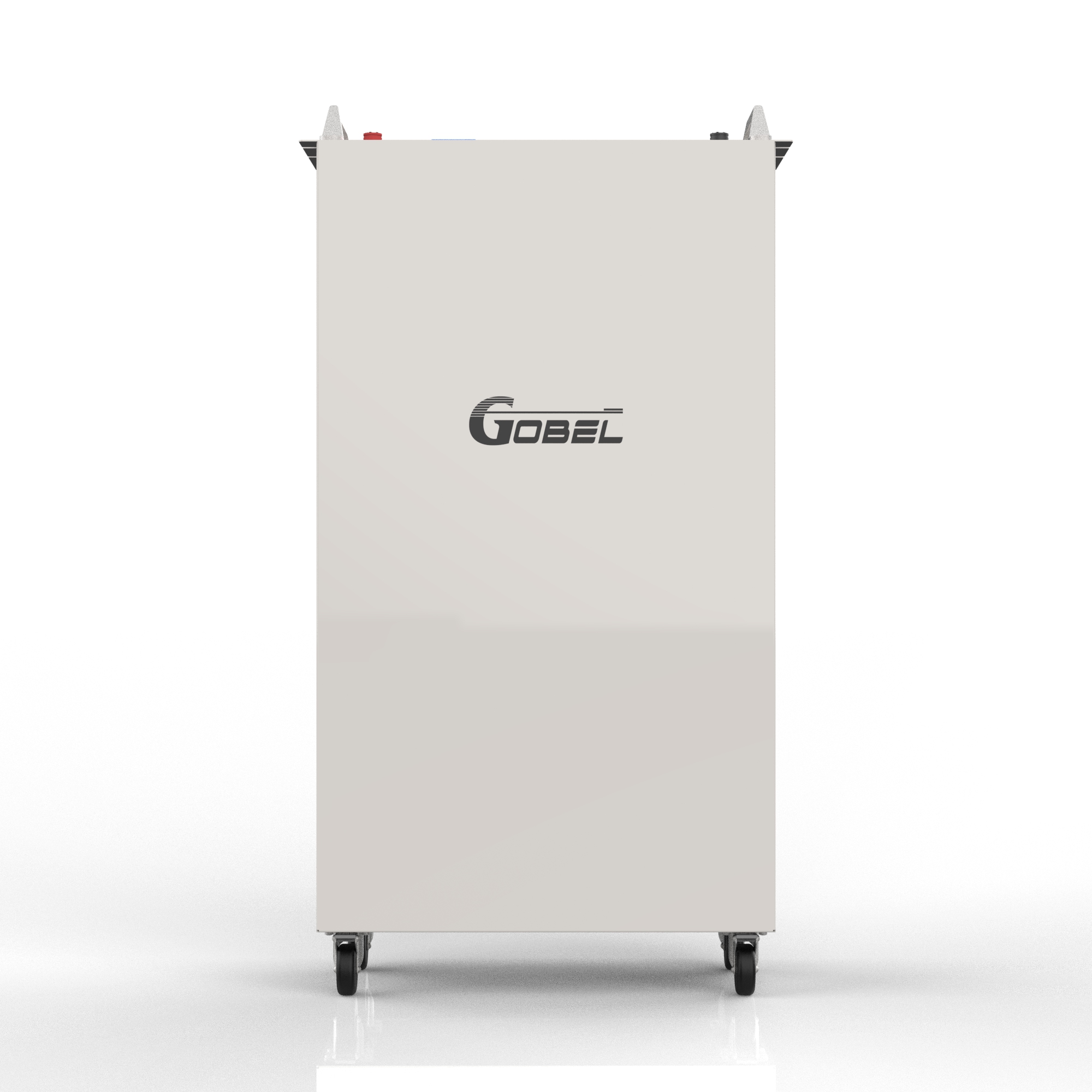
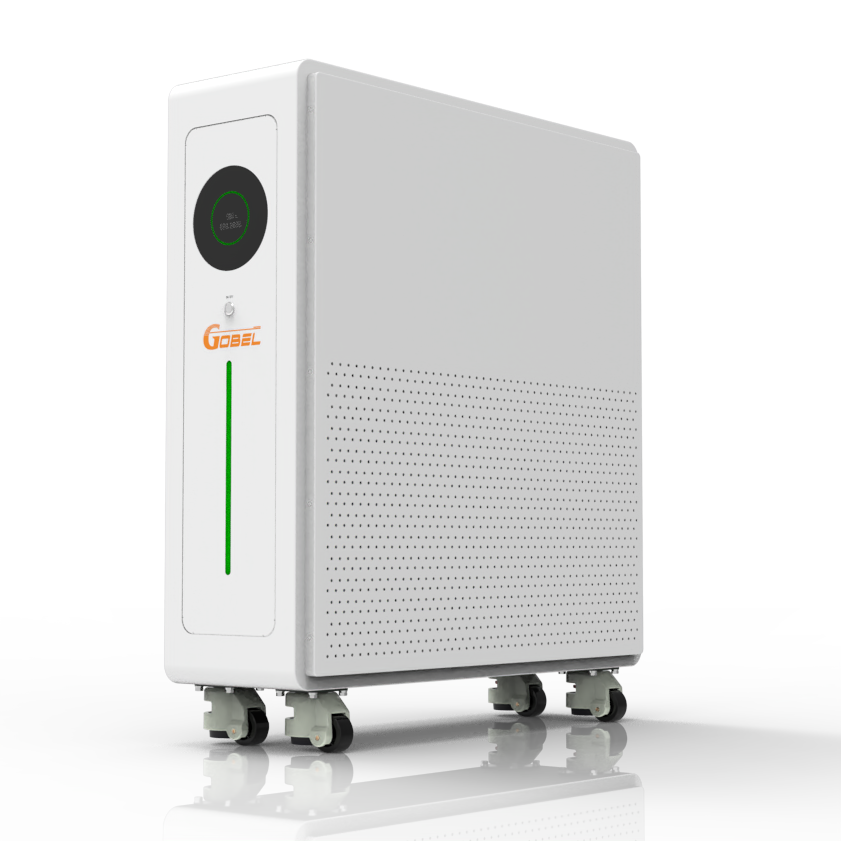
Some storage projects outgrow the footprint of a single battery cabinet. A Gobel Power case image shows several battery enclosures arranged on an open rack, with wall-mounted power equipment above and a dedicated service area around the installation. The photograph is a useful starting point for discussing modularity, maintenance access and electrical coordination in a larger solar-plus-storage project.
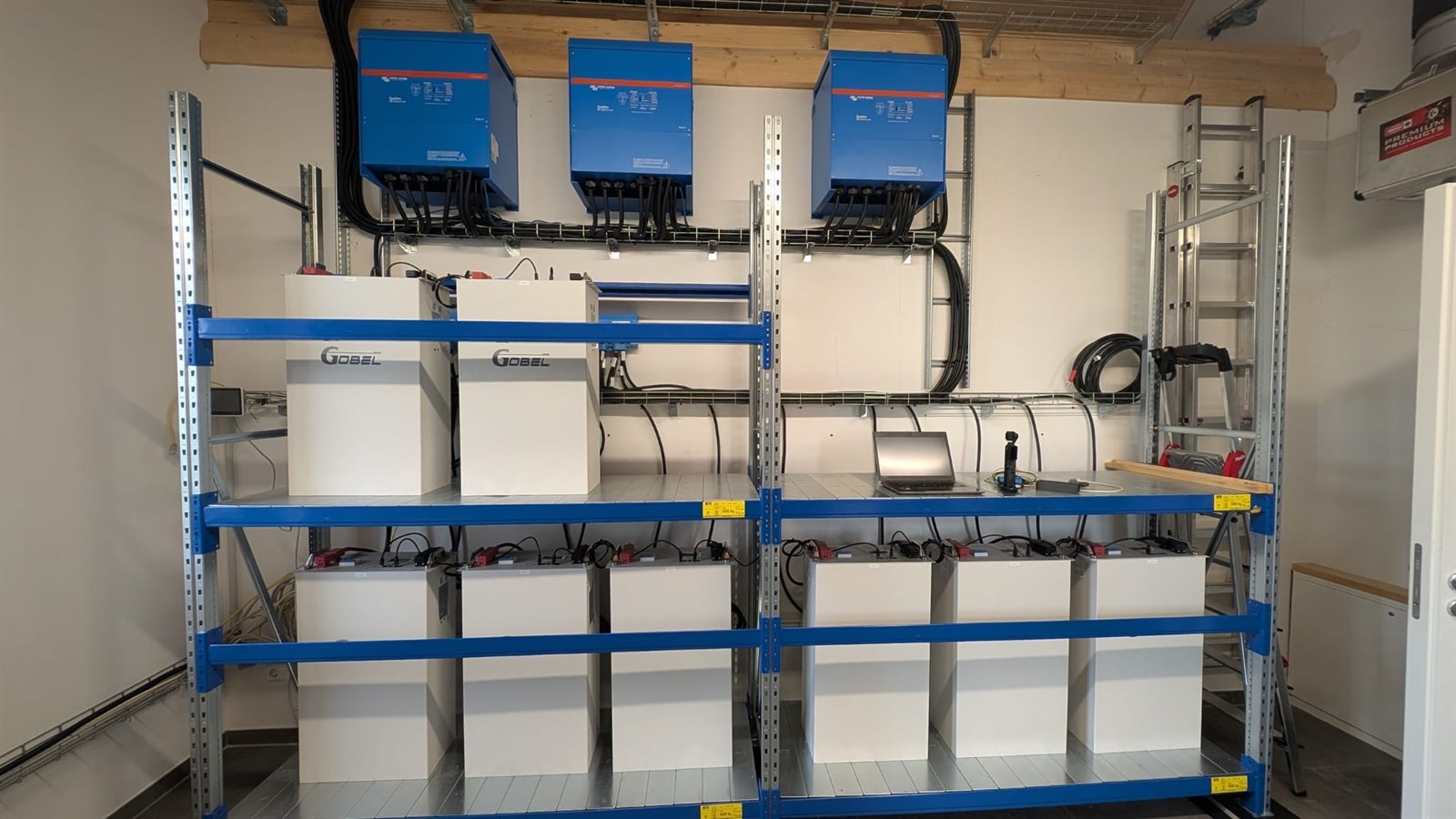
When multiple battery modules share a room, the rack becomes part of the system design. The installer must account for the structure's load rating and anchoring, access to terminals and service points, cable management, protective devices and any manufacturer-specified spacing. In the image, the open arrangement makes the battery units visible and reachable. That visual accessibility is useful, but compliance and serviceability can only be confirmed against the actual design documents and local codes.
Using multiple battery units can give a project team flexibility in physical arrangement and capacity planning. It does not mean that any number of units can be connected without limits. Parallel operation, battery management settings, current sharing, cable sizing and inverter communication have to follow the approved configuration for the exact models involved. A future expansion may also require changes to protection, inverter output or commissioning settings. Those details should be agreed before a customer relies on a growth plan.
For a buyer comparing systems, energy capacity in kWh and output power in kW should be reviewed together. The project may have enough stored energy for its daily target yet still need a different inverter arrangement to meet peak demand. If backup is required, the proposal should specify critical circuits, expected load profile and transfer equipment. If the goal is solar self-consumption or tariff shifting, the installer should model generation and demand against local electricity rules.
This image shows a real physical arrangement of Gobel Power batteries, not a published performance test. It does not establish the installation's location, model numbers, usable capacity, operating mode or financial return. What it does show is the practical value of planning the battery, power electronics and service space as one system. That approach helps installers communicate clearly with customers and avoids choosing equipment by capacity alone.
See the Gobel Power product range for battery formats that can be evaluated for residential and light commercial storage. Final selection should use the current product documentation and a site-specific design.
 Copyright © 2026 Gobel All Rights Reserved.